November 9, 2026
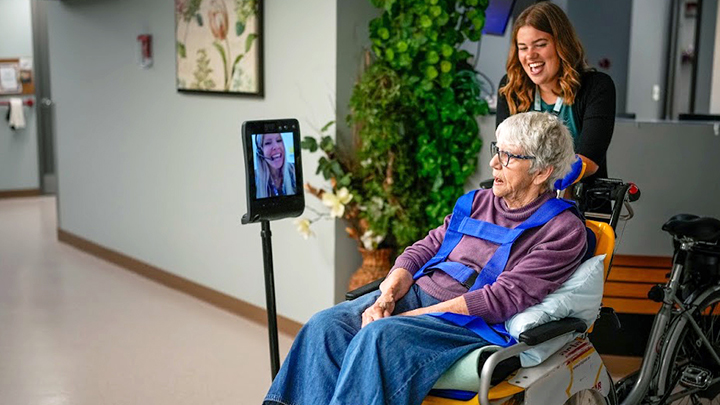
A Recreation Assistant and resident at Oyen Continuing Care Home use a robot to discuss recreational needs. Photo by Leah Hennel.
The first time Elaine Zeer saw a robot visiting her mother, she wasn’t sure what to make of it.
“It seemed a bit weird at first,” says Zeer, whose mother, Barbara Tiegs, lives at Oyen Continuing Care Home. “But I was surprised at how well my mom would converse with Mackenzie on the robot, just as if she was here.”
Mackenzie Peterson is a recreation therapist with Assisted Living Alberta based in Milk River, a five-hour drive from Oyen. She is helping provide coverage while Oyen’s regular recreation therapist is on maternity leave. With no one available to cover the maternity leave in person, the Oyen team is working with Mackenzie and the therapy assistants to keep recreation therapy available.
“Instead of a resident or a patient waiting for the therapist to physically travel several hours to the site, I can have a real-time presence within the facility,” Mackenzie says.
After meeting residents in person for their first visit, Peterson stays connected from Milk River using the robot for follow-up care.
The robot looks a bit like a large tablet mounted on a wheeled stand that Peterson can drive remotely. From Milk River, she can steer through the halls, enter a room and turn to speak with someone beside her. Its camera and microphone let people see and hear one another. Trained therapy assistants in Oyen provide hands-on support and help carry out treatment plans.
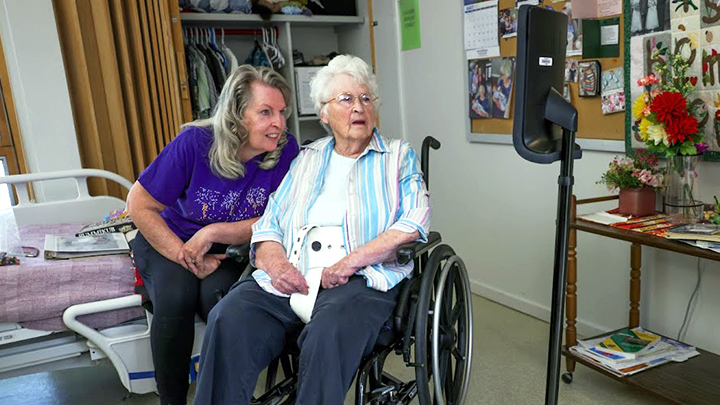
Elaine Zeer and her mother, Barbara Tiegs, a resident of Oyen Continuing Care Home, connect with recreation therapist Mackenzie Peterson through the robot’s tablet. Photo by Leah Hennel.
“The residents and patients have been very receptive to it,” Peterson says. “It felt like I’ve been there in person a lot more than I even anticipated.”
One resident named the robot “Charlie”. Others have suggested decorating it or giving it pool noodles for arms and legs. Peterson says she is sometimes known around the site as “the robot girl.”
The robot lets Peterson get to know residents and plan activities around their interests. For one program, she asked therapy assistants in Oyen to bring in a wedding dress to spark memories and conversation. Through the robot, she can hear residents’ stories and use what she learns to help plan other activities.
“There are so many amazing stories that residents come into facilities with,” she says.
The robot has also helped Peterson support Zeer, whose mother is nearly 95 and occasionally loses a word in the middle of a conversation. Zeer had little experience with dementia and wanted advice on how she and her siblings could spend meaningful time with their mother.
During a session through the robot, Peterson shared information about dementia and caregiver burnout. She used the robot’s screen to show Zeer information, then switched back so they could see each other and talk face to face. Zeer says the conversation was emotional, but it also gave her practical ideas for making visits with her mother more meaningful.
One of those ideas was reading together. Zeer recently brought her mother a book from home and discovered that Tiegs still loves to read aloud, using the same expression she always has. Zeer shared the idea with her siblings so they could try it during their visits, too.
“The fact that we could do that presentation over a robot, and still have a personal conversation in between, it wasn’t like watching it on TV,” Zeer adds.
The mobile robot is a temporary solution that has helped keep recreation therapy services going in Oyen. The experience has also shown how technology can help residents stay connected to care and the people who support them.

Elaine Zeer, daughter of Oyen Continuing Care Home resident Barbara Tiegs