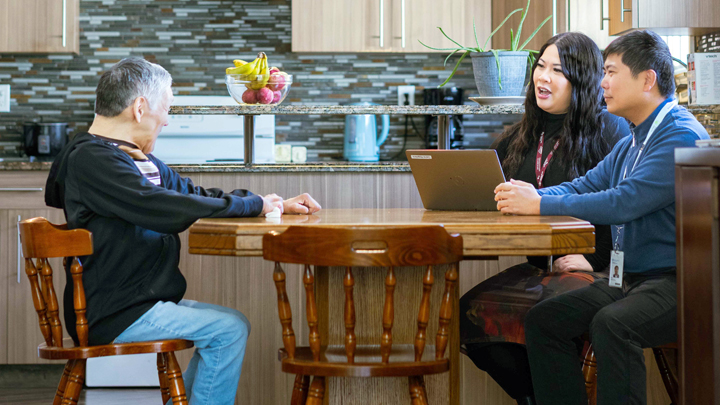
For ALA Home and Community Care Case Manager Erwin Cheng and AHS Registered Dietitian Celine Magalona, visiting clients at home offers a fuller picture of their health and the everyday challenges they face. Photo by Evan Isbister
Sometimes, the best way to understand someone’s health needs is to see what everyday life looks like for them.
This is why Assisted Living Alberta (ALA) and Alberta Health Services (AHS) Home and Community Care teams work together to help clients overcome challenges and stay healthy in their own homes.
For ALA Home and Community Care Case Manager Erwin Cheng and AHS Registered Dietitian Celine Magalona, visiting clients at home offers a fuller picture of their health and the everyday challenges they face.
“When you’re in a clinic or on the phone with someone, they might tell you one thing, but that’s not always the full picture,” Magalona says. “In Home and Community Care, you can actually see what they’re working with.”
What first appears to be one health concern can sometimes reveal other challenges that might otherwise go unnoticed.
For example, a client experiencing falls or having difficulty getting around may also be struggling to access food or prepare meals. A home visit can help uncover those concerns and determine whether nutrition may be contributing to their health challenges.
“It’s like a puzzle. I look at the whole picture, and when I see a missing piece, I bring in someone like Celine who has the expertise to help,” Cheng says.
“When we visit someone at home, we look at their overall health and circumstances,” he adds. “They may have been referred to us for one concern, but our assessment can identify other things they need help with, including nutrition.”
As a Home and Community Care Case Manager, Cheng assesses clients’ health and coordinates services that can help them remain as independent as possible. His work may involve addressing mobility, personal care, and other challenges affecting their daily lives.
When nutrition concerns arise, he can turn to dietitians like Magalona, who bring specialized knowledge to the care team.
She can see what food is in the refrigerator, what cooking equipment is available, and whether the client can safely prepare meals.
For some clients, cooking may be limited to using a microwave or kettle. Others may have difficulty getting to grocery stores or affording the food they need.
“It’s just really looking at how the person presents, what are their needs, and then how does the home environment affect what they’re able to access to meet their needs,” Celine says.
Rather than simply providing a list of recommended foods, she can build a nutrition plan around what is practical for that individual.
She may look through a client’s pantry, with permission, to suggest meals using ingredients already available. She has even helped clients make smoothies in their own kitchens.
Depending on a client’s circumstances, support might also include connecting them with community food resources or arranging a food hamper with items they can easily prepare.
But the teamwork doesn’t end after the dietitian’s visit.
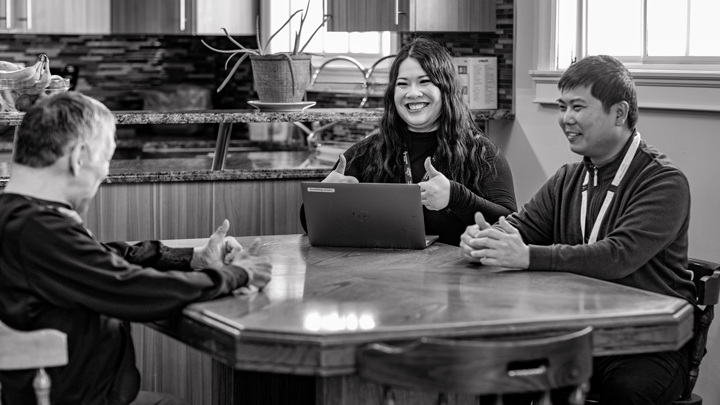
ALA Home and Community Care Case Manager Erwin Cheng and AHS Registered Dietitian Celine Magalona combine their expertise to help clients receive care that works for them, in the place they call home. Photo by Evan Isbister
Cheng and Magalona share updates, review clients’ progress, and adjust support when needed. He may help coordinate additional Home and Community Care services, while she provides nutrition recommendations and follows up to see whether a plan is working.
“It’s a two-way communication,” Cheng says. “It’s not like a one-way thing where after Celine goes, I forget everything.”
For Cheng, who has worked in acute care, continuing care, and palliative care, Home and Community Care offers an opportunity to help clients remain in familiar surroundings.
“Having them stay in their home for a long time and providing some supports for them is rewarding,” he says.
Magalona, who has previously worked in clinics and other care settings, appreciates the opportunity to spend more time with clients and understand what will make the greatest difference in their lives.
She also values the teamwork that comes with providing care in people’s homes.
“It’s a dynamic environment, the home, so we really do have to rely on each other’s expertise,” she says.
For Cheng and Magalona, it’s about combining their expertise to help clients receive care that works for them, in the place they call home.