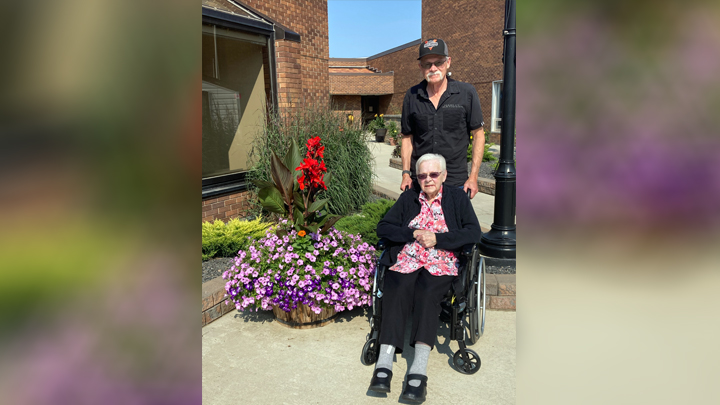
Pictured with her son John, Katarina Thomas started these plants from seed in March through the Horticulture Program, caring for them as they grew, and transplanting them into planters during the spring.
A horticultural program at Brooks Health Centre is growing much more than a garden.
Led by the Assisted Living Alberta Recreation Therapy team, the initiative has enhanced an already welcoming courtyard, enriching it with vibrant flowers and interactive horticultural activities, creating a welcoming and interactive space for residents, families, and visitors.
According to Recreation Therapist Carrie Huckerby, the courtyard's success is a community effort.
“There are a lot of hands that are involved in it,” says Huckerby. “The families, visitors, and residents enjoy that area throughout the spring and summer months because it's so nice, and such a welcoming and peaceful area.”
The gardening begins long before flowers appear in the courtyard. In early spring, therapy assistants facilitate the Horticulture Program by starting seedlings indoors, while staff and family members contribute additional plants through donations. The Brooks and District Health Foundation has also helped fund beautification efforts through the AHS Volunteer Resources department, which supplies the annual bedding out plants for the courtyard.
Later in the spring, residents, families, volunteers, and staff come together for a shared planting day and continue to water and maintain the garden throughout the growing season. The garden features a variety of vegetables alongside an assortment of flowers such as canna lilies, petunias, sunflowers, impatiens, and marigolds. These seasonal plantings complement the garden’s existing features, including a bubbling waterfall fountain, and a diverse collection of shrubs and ornamental grasses nestled among stone and shale beds.
Huckerby says the program has helped revive a lifelong passion for many residents.
“So many of our residents used to garden, and they worked hard throughout their lives, so they're very knowledgeable and it helps them feel a sense of purpose when they're contributing to their home environment,” she adds.
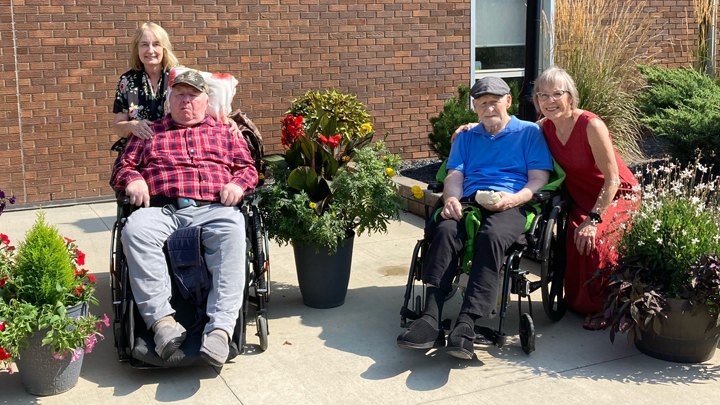
Yvonne and Wendy, pictured here enjoying time on the patio with their husbands, Harvey and Gil, are among the volunteers who generously gave their time to help plant the bedding plants donated by the Brooks and District Health Foundation.
Families also enjoy spending time outdoors with loved ones, and many are eager to contribute.
“When residents have their families come in, they want to be involved and they want to do things,” says Huckerby. “If a guest sees that something's dry or needs to be watered, they will pitch in and help us out—it’s very important to them.”
Designed to enhance quality of life for continuing care residents and acute care patients, the horticulture program offers benefits that extend far beyond planting flowers. It encourages physical activity, stimulates memory and cognition, supports emotional well-being, and fosters social connection.
The program's therapeutic impact is evident among residents living with cognitive impairment. Staff have observed participants demonstrating previously hidden gardening knowledge and skills.
“When residents with cognitive impairment come out to the garden area, they are able to tell us what to do and share plant and planting advice with us,” Huckerby adds. “It’s so gratifying to be able to hear those skills of what they did in the past be recalled as they are actively involved in the program.”
The courtyard also inspires residents to stay active. One highly independent resident has a daily routine to water the gardens at a specific time each day, providing a sense of purpose and an opportunity to maintain their physical fitness.
Following years of steady growth, the horticulture program continues to flourish, thanks to the dedication of residents, families, staff, volunteers, and partners in the community.